Social in Six 107
1. Instagram has removed an AI remix feature days after introducing it
The story:
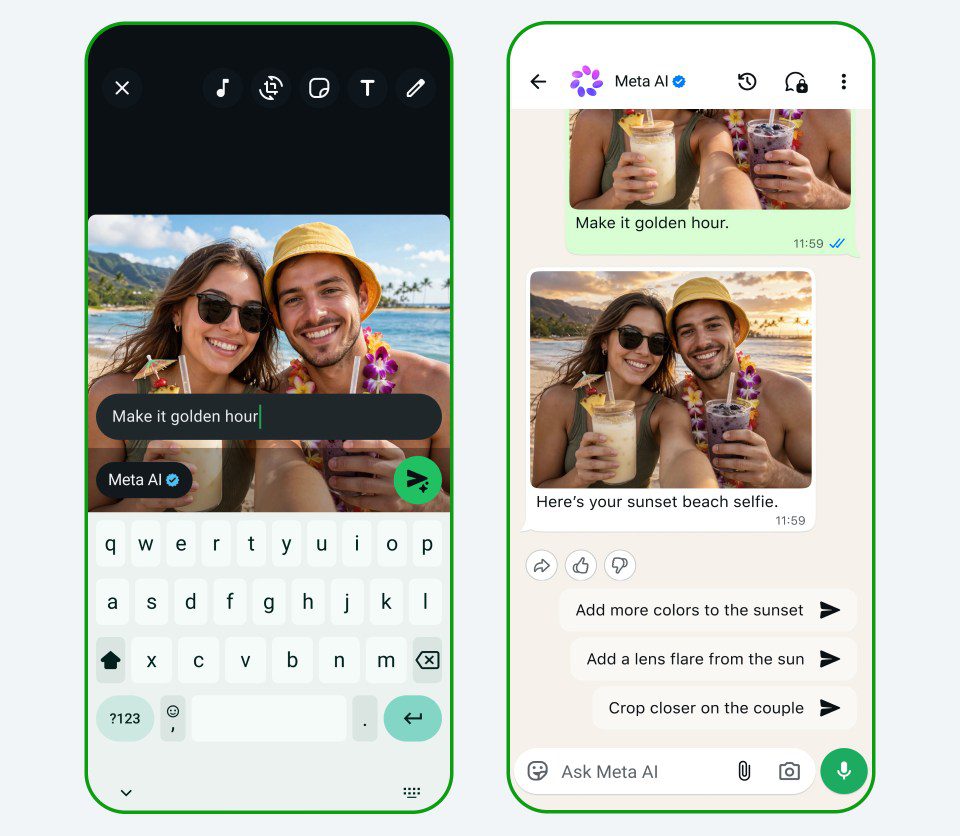
- When Meta launched Muse Image, its own image generation tool within Meta AI, the tool featured an AI remix option that allowed users to reference public Instagram accounts when generating images.
- The feature meant public Instagram posts, Reels and profile images could be pulled into AI-generated visuals by @ mentioning a profile, with users opted in by default unless they manually disabled it via settings.
- Following backlash from users and talent agencies over potential misuse, Meta removed the feature from Muse Image’s capabilities just two days after launch, saying it had “missed the mark”.
So what?
Maybe we’re all a little bit addicted to those AI fruit videos, but this update proves we definitely aren’t ready for our likeness, content and identity to be used as AI inputs without explicit prior consent. Any brand using AI-generated or AI-assisted creative needs to be clear on permissions, disclosures and source material before publishing.
There is also a reputation point here. Even if Meta’s intention was to test a new creative tool, the speed of the reversal made the feature the story. For marketers, the lesson is simple: AI rollouts need trust built in from the start.
2. YouTube expands Shopping affiliate programme to the UK
The story:
- YouTube has expanded its Shopping Affiliate Program to eligible creators in the UK, giving them a new way to earn revenue from product recommendations.
- Creators can tag products from partner merchants including Wayfair, Currys, Debenhams, Boots, M&S and Etsy across videos, Shorts and livestreams.
- Eligible UK creators in YouTube’s Partner Programme can access the feature, with YouTube saying creators can also use tools like timestamps to prompt viewers to shop at the right moment.
So what?
This is a sensible move from YouTube. There are whole audiences who trust creator recommendations more than any product page, especially in categories where people want proof, demos and opinion before they buy.
For brands, the opportunity is to make creator content more directly shoppable without breaking the viewing experience. Product tags and timestamps give marketers a clearer route from influence to action, especially across longer videos where purchase intent can build over time.
3. You can now report AI slop on LinkedIn
The story:
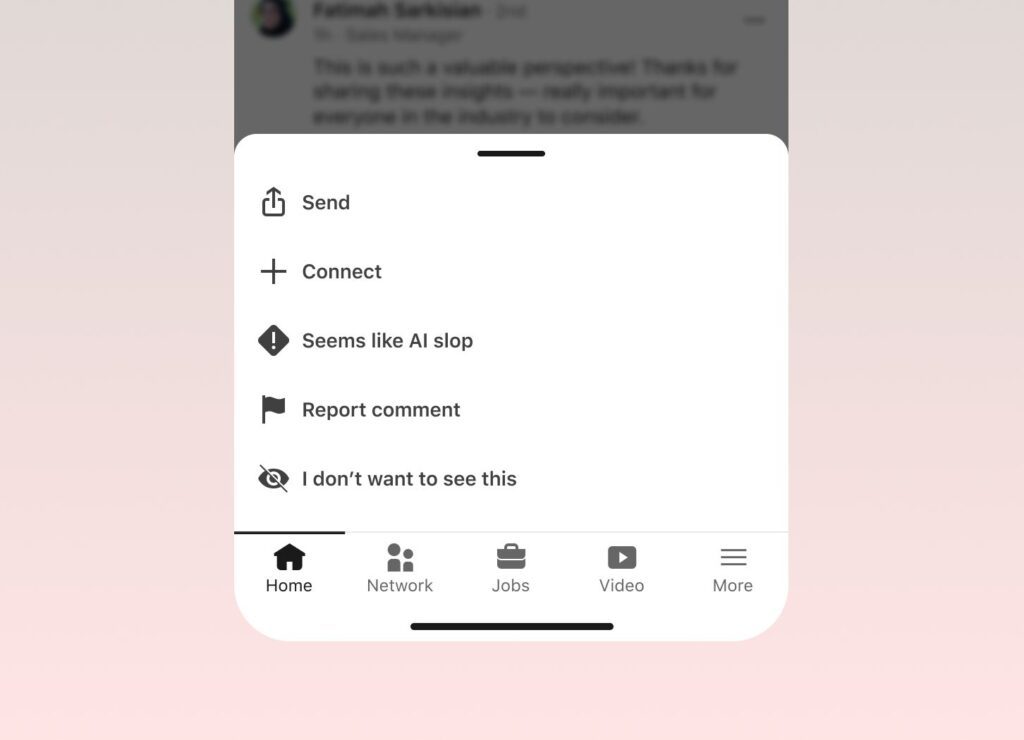
- LinkedIn is testing a new option that allows users to report posts or comments that appear to be AI-generated “slop”.
- Users flag content through the three-dot menu, with LinkedIn using those reports to improve its detection of AI-generated and generally low-quality content.
- The news follows a string of updates from platforms in an attempt to combat content of this type, with Pinterest and TikTok both introducing features that let users adjust how much AI-generated content appears in their feed.
So what?
This is a necessary move for a platform where AI-generated content has become very visible very quickly. LinkedIn has a credibility problem if feeds become overloaded with generic thought leadership, recycled prompts and posts that sound human-ish but say very little.
For brands and marketers, the implication is clear: AI-assisted content still needs a human point of view. If users can report content for feeling low-effort or inauthentic, then blandness becomes a performance risk, not just a creative one. This could also give LinkedIn valuable data on what people actually define as “slop”, which may shape how the platform ranks, flags or suppresses content in future.
4. TikTok Shop merchants in the UK now have access to enhanced insights
The story:
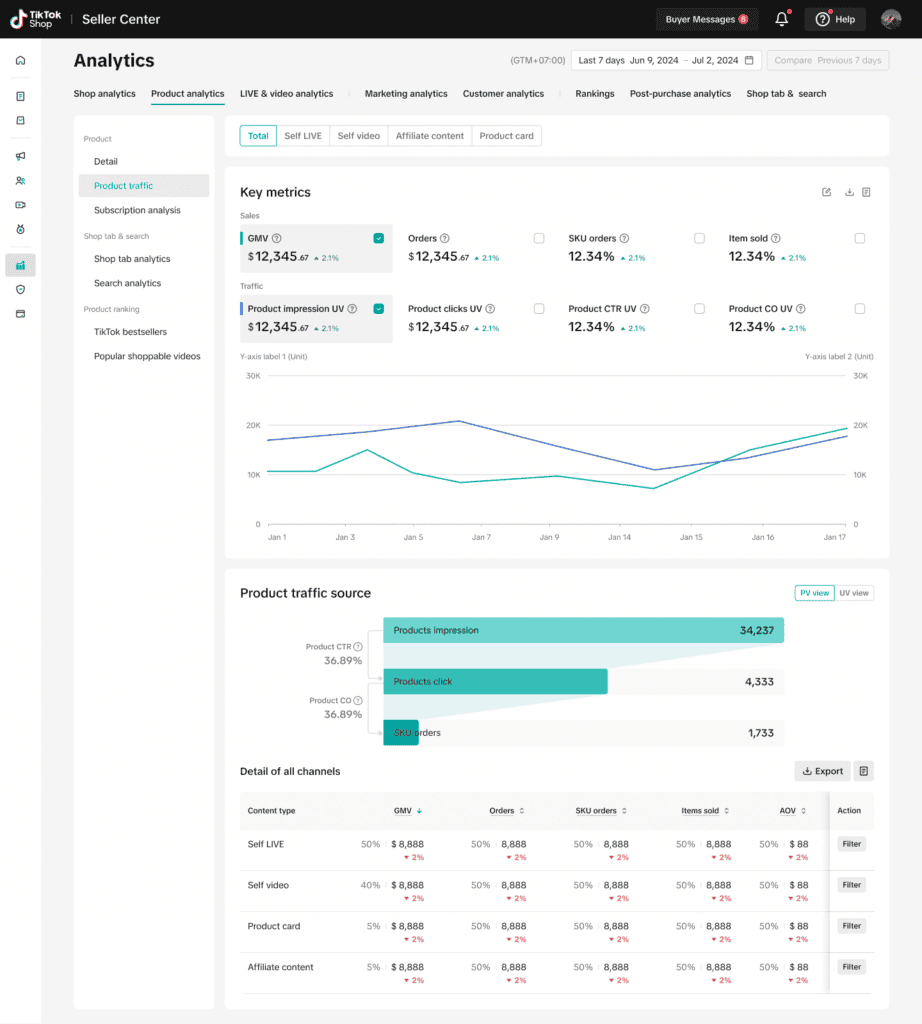
- TikTok Shop sellers in the UK now have access to a revamped Product Traffic Analysis module within Shop analytics.
- The update gives merchants more detailed insight into product performance, including product rankings, search and discovery appearances, full traffic overviews and improved metric comparisons.
- Sellers can also see expanded traffic source data, including whether traffic comes from livestreams, video links or affiliate links, as well as compare conversion efficiency across different channels.
- TikTok Shop LIVE has grown 55% year-on-year, with more than 6,000 livestreams happening every day in the UK, according to the platform.
So what?
TikTok Shop is no longer a niche experiment. It’s becoming a serious commerce ecosystem, and sellers need more than surface-level sales data if they’re expected to optimise properly.
For brands and merchants, better traffic analysis means better decisions. They can understand where sales are coming from and adjust product strategy accordingly.
5. EU creators face new legal requirements for AI-generated content
The story:
- New rules under the EU AI Act require AI-generated or AI-manipulated promotional content to be clearly labelled from 2 August.
- The rules apply to audio, image, video and text content that has been artificially generated or manipulated, though there is still some ambiguity around artistic, creative, satirical or fictional work.
- Reportedly, further revisions to the Act that aim to improve transparency around AI-generated content are in the works for later this year and next.
- In 2024 Meta rolled out an automatic “AI info” label for Facebook, Instagram and Threads when it detects AI-generated content, while Pinterest followed suit a year later. TikTok has automatic and manual “AI-generated” labels, first introduced in 2023.
So what?
For brands, creators and agencies, this feels similar to the influencer marketing shift that followed the early days of undisclosed paid partnerships. The rules are catching up with the format, and vague disclosures will not be enough.
The difference is that AI is a moving target. Unlike #ad labelling, where the principle is fairly simple, AI-generated and AI-manipulated content can sit on a much wider spectrum. That means brands will need clearer internal processes for identifying when AI has been used, how it should be labelled and who’s responsible for checking compliance before content goes live.
6. Meta is working on an AI coding agent to rival OpenAI and Anthropic
The story:
- Meta has released new AI models and developer tools as part of its wider push towards what Mark Zuckerberg calls “personal superintelligence”: the ability for everyone in society to access and direct powerful, complex tech that “improves all of our lives”.
- Its latest open-weight AI model, Muse Glimmer, is designed for coding and agentic tasks, positioning Meta more directly against AI products from OpenAI and Anthropic. The company says an open-weight version of Muse Spark, its most powerful AI model, is coming.
- Zuckerberg has also published a long-form statement outlining Meta’s belief that AI should become widely accessible, with personal agents that can understand users’ goals and work on their behalf.
So what?
Meta is not exactly the little guy, but in the AI coding space it does feel more like the challenger. OpenAI and Anthropic have already shaped a lot of the conversation, so Meta entering more directly makes this category even more competitive.
For marketers, the bigger implication is the continued shift towards AI agents that can build, test, optimise and execute tasks with less human input. If these tools become more accessible, they could change how teams prototype ideas, create digital experiences and automate parts of campaign production.
There is also a platform play here. Meta has the scale, the data and the incentive to make AI feel useful inside everyday workflows. Whether it becomes the go-to “vibe coding” platform is another question, but it’s definitely not out of the realm of possibility.
![SOCIAL IN SIX [107]](https://www.socialchain.com/wp-content/uploads/2026/04/SocialMinds-Artwork-1x1-New.png)


Like this? Read more