Social in Six 101
1. X’s chatbot Grok has been restricted in several regions worldwide over sexualised AI images
The story:
- X has restricted Grok’s image generation capabilities after users were found creating sexually explicit and non-consensual images of real people, mainly women and children.
- The UK government is reviewing a bill this week that will make creation of such images a criminal offence, and UK media watchdog Ofcom has launched a formal investigation. Several European countries, Australia, Malaysia and Indonesia have blocked or condemned the platform.
- X responded first by restricting access to Grok’s image generation tools to paying subscribers only, before fully removing Grok’s “undress” feature. Elon Musk has hit back by claiming that the platform is being singled out by a “fascist” UK government.
So what?
Since Elon Musk’s acquisition of X in 2022, the platform has faced ongoing controversy, ranging from accusations of promoting hateful speech to concerns around its Grok AI tool. Many brands have already reduced or ended activity on the platform due to brand safety concerns, and the latest Grok-related issues have added to that unease. Once valued for simple, text-led, community-driven conversation, X is increasingly associated with unsafe or harmful content, prompting some remaining brands to consider alternative platforms for text-based engagement. The Grok controversy has also intensified scrutiny of AI image generation, with growing caution among users and organisations, alongside expectations of tighter regulation as governments, including the UK, introduce laws targeting generative AI and online safety.
2. Instagram is rolling out a function that lets you customise what your algorithm shows you
View on Threads
The story:
- Instagram has rolled out its tests of the Your Algo feature, which lets users adjust what content the feed shows them, to all English-speaking users globally.
- Accessed via the top right slider icon in the Reels feed, Your Algo lets users select preferences for more or less of specific types of posts and topics from accounts they follow.
- For a limited time, you can also tell your algorithm the top three interests you want to see more of in 2026 by choosing from a list of set topics, such as “Sports”, “Pop music” and “day in the life”.
So what?
Instagram’s new feed customisation feature is positioned as a way to help users see more content aligned with their interests, rather than random posts from unfamiliar accounts. This responds to long-standing frustration around non-chronological feeds and discovery-driven recommendations. However, the feature must be manually enabled, meaning some users may never use it, and it remains unclear whether it will be a permanent update.
3. Pinterest is increasingly finding favour with Gen Z users
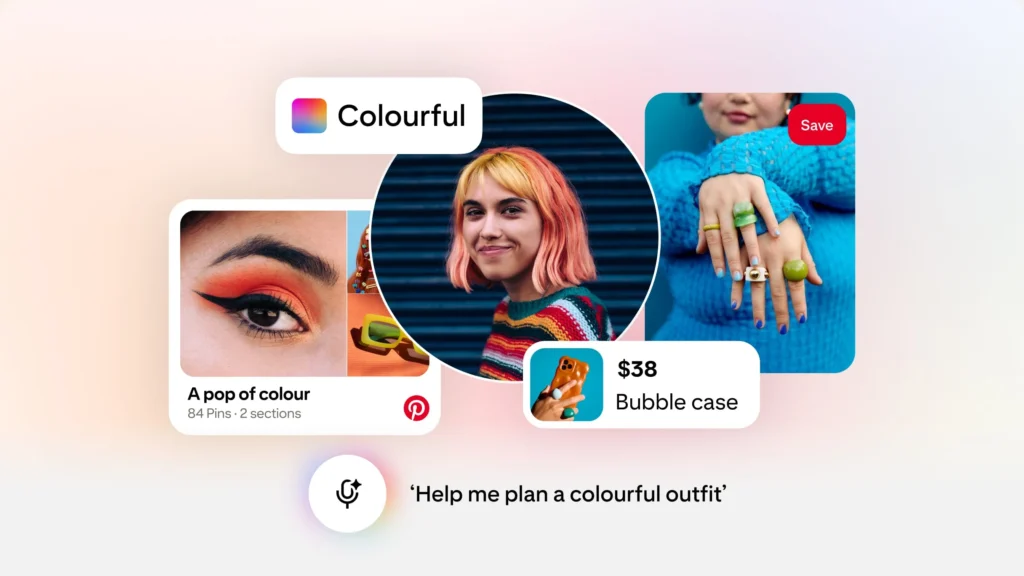
The story:
- According to internal data, Gen Z users now make up 50% of Pinterest’s user base, comprising its largest, fastest-growing cohort.
- Pinterest reports that this uptick in younger usership is down to the platform prioritising discovery that reflects users’ individual tastes and identities as opposed to pushing algorithm-driven trends, which can tire quickly.
- Pinterest also notes its visual-first approach is more aligned with how Gen Z discovers content than text-based platforms, citing data that found 69% said visual results are more helpful than text or reviews when deciding what to buy.
- Finally, the platform says when AI is used in the right ways, Gen Z embraces it: 69% of Gen Zers agree that they want AI tools that improve their life, rather than just keep them scrolling, and 41% of young consumers use AI weekly to explore fashion, compare products and style outfits.
So what?
Pinterest is increasingly attracting Gen Z users who are seeking a more intentional, interest-led online experience. As younger audiences move away from constant trend cycles and doomscrolling, Pinterest’s focus on hobbies, inspiration and personal taste feels better aligned with a shift toward slower, more mindful digital behaviour. The platform’s emphasis on visual discovery over influencer-led content has helped it stand out from other social apps. This positioning has made Pinterest particularly appealing in categories like fashion, home and beauty, where aesthetic imagery and inspiration play a central role.
4. YouTube Shorts is the latest video format to jump on still image carousels
The story:
- YouTube has confirmed it’s testing still image carousel posts within the Shorts feed, similar to carousels that exist on TikTok and Instagram.
- These carousel formats let creators add up to 10 still images as a post on Shorts, and YouTube says the ability to add audio is coming soon.
- The feature is still in testing with a select group of creators.
So what?
YouTube’s introduction of still images and carousel-style posts signals a broader shift toward positioning the platform as a more rounded social experience, rather than a video-only destination. As users express dissatisfaction with algorithm changes on other platforms, YouTube may increasingly become a space for both visual and video-based content. This evolution could encourage more creators to treat YouTube as a primary social platform, using Shorts and image-based posts alongside traditional video formats.
5. Instagram is coming for YouTube with a TV app for Reels
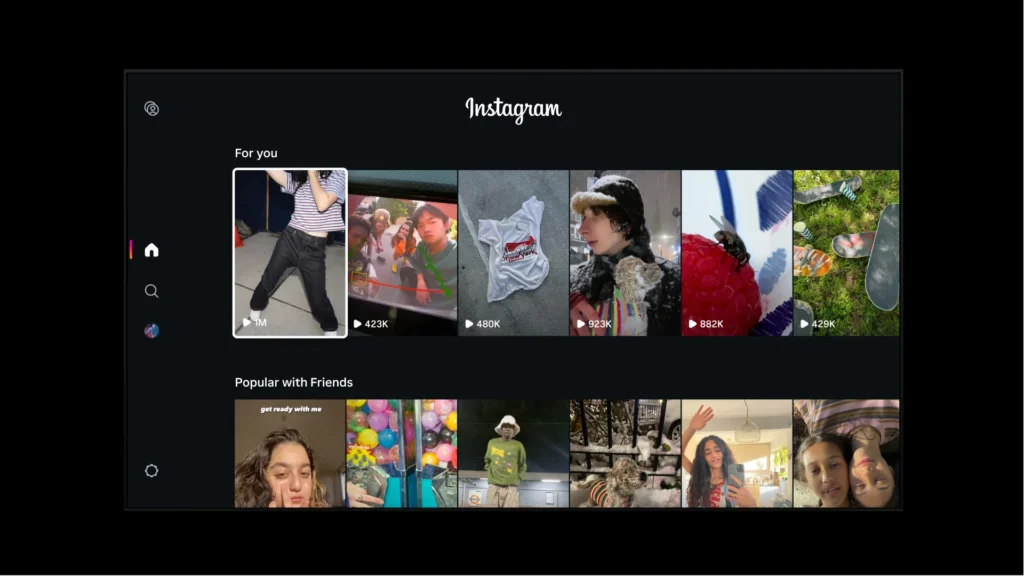
The story:
- Instagram for TV, not to be confused with IGTV, is a newly launched dedicated TV app that lets users watch Reels on Amazon Fire TV devices.
- It works very similarly to YouTube’s CTV app in that it lets users log into their Instagram profiles and watch video content grouped into channels; for example, videos popular with your friends, and videos that match your interests. The major difference from YouTube is that content is 9:16, not 16:9.
- For now, it’s in testing in the US only, but Instagram has confirmed it’ll roll out to more countries and devices soon.
So what?
Instagram for TV represents a clear attempt to compete more directly with YouTube and re-enter the long-form viewing space. While Instagram technically supports longer videos, most content on the platform remains short-form, particularly within Reels. The TV app could encourage more episodic or serialised content designed for larger screens, potentially attracting streamers and video-first creators. However, adoption may be limited by user preferences, as many viewers still favour horizontal 16:9 video for TV viewing over Instagram’s vertical 9:16 format.
6. Creators say Instagram likes aren’t as valuable as they once were
The story:
- In what’s been coined an “Instagram like recession”, TikTokers like @kimberlywhiteee, @hiiibarbiee, @tjr and @sweetiebrownieee are reporting that Instagram likes are few and far between in 2026 compared to previous years.
- Some users are posting screenshots of falling like counts and engagement metrics from 2026 compared to 2025 as evidence.
- Much of the theorising points to a shift in both user behaviour and the Instagram algorithm. In 2024, Instagram head Adam Mosseri said shares are a major signal for how the algorithm ranks content, rewarding users with increased reach over time.
So what?
There is growing evidence that likes are becoming less central to how engagement is perceived on Instagram. Many creators and users now place greater value on actions such as saves and shares, which require more intentional interaction. These behaviours often indicate deeper engagement and are increasingly prioritised by platform algorithms. At the same time, more users are choosing to hide like counts, contributing to a cultural shift where liking content feels less visible and less important, reinforcing the idea that passive consumption has become more common than active interaction.
![SOCIAL IN SIX [101]](https://www.socialchain.com/wp-content/uploads/2025/11/SocialMinds-Podcast-Artwork-scaled.jpg)


Like this? Read more