Top takeaways from our time at MAD//North
Two brands, one big theme: integration that actually delivers.
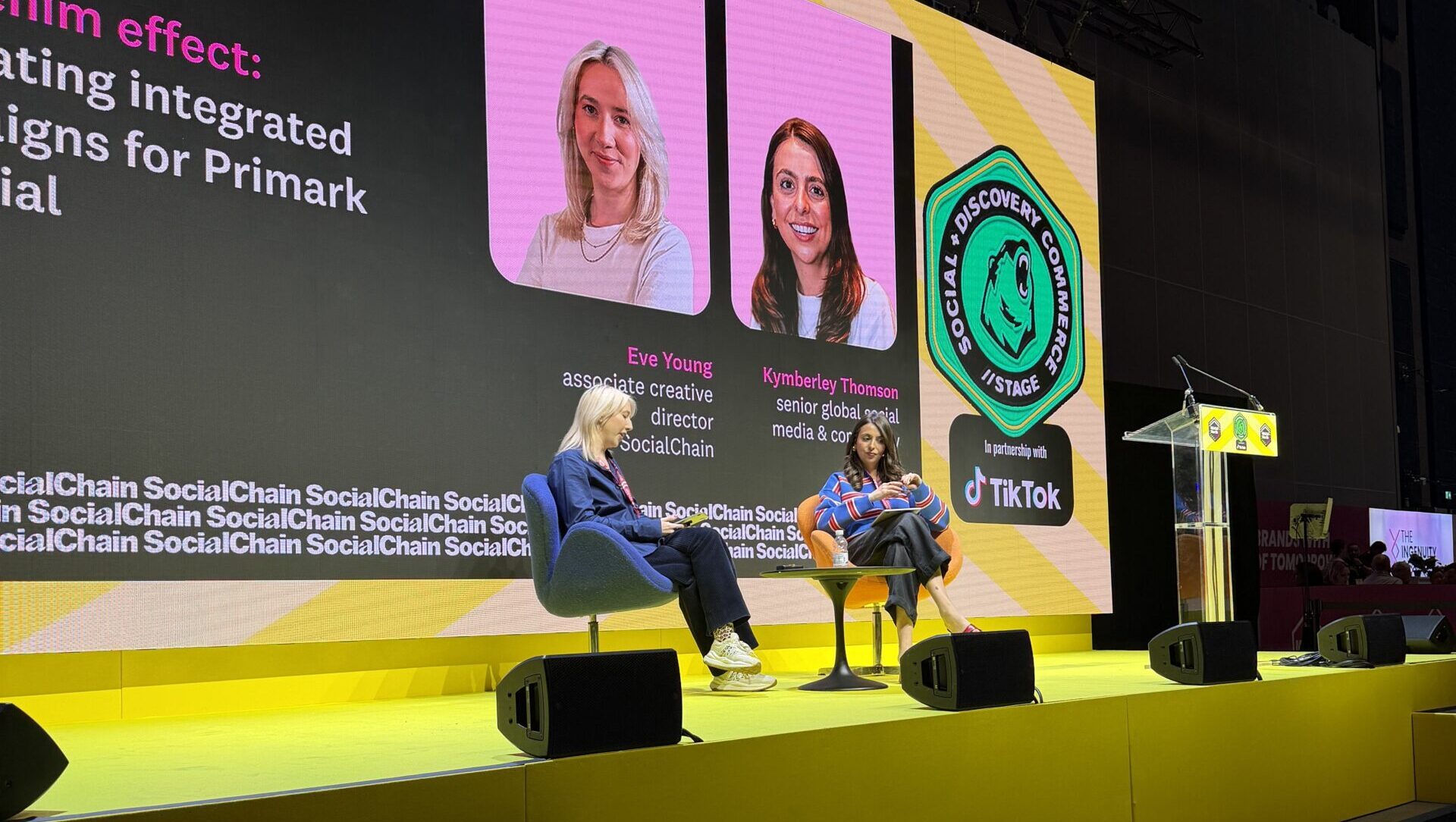
This week, we headed to Manchester for the second-ever MAD//North – a two-day celebration of the best brands and agencies shaping the North’s marketing scene. Across two sessions on the Social and Discovery Commerce Stage, we joined our clients loveholidays and Primark to unpack what it really takes to break out of category sameness, build integrated campaigns properly, and make social work harder.
Here’s what we learned.
1. In a sea of sameness, creativity is crucial.
Kicking off the day, our strategy and innovation director Gareth Harrison joined Jacqui Grimsey-Jones, brand director at loveholidays, to explore what it means to operate as a true challenger brand in travel.
Jacqui was clear: loveholidays had built a hugely successful business through performance marketing. But long-term growth required more.
“The travel category is a sea of sameness. Show me ten travel ads and I’ll show you ten versions of the same beautiful beach, the same generic happiness.”
Rather than abandon performance, the shift was to expand it – moving from purely bottom-of-funnel capture to full-funnel demand building. From price-driven bookings to what Jacqui described as “love-driven bookings…but still at great prices.”
That meant doubling down on creativity as a growth lever. The overarching principle: the loveholidays twist.
This is essentially the idea that every brand has something that makes them unique: your product, your founder’s origin story, your brand name. Every piece of creative and messaging is filtered through the lens of the loveholidays twist. Is it uniquely loveholidays? Could another brand stick their logo on it? If so, it’s scrapped.
It’s a simple but powerful discipline that any brand can apply. So, whatever your twist is, find it – and stick with it.
2. Creators are a creative layer, not a channel.
For loveholidays, creators aren’t brought in at the end to distribute a finished idea. They’re involved at the start, shaping it.
Campaigns like Holiday Billboard with Joe Marler and the Bus Aunty activation demonstrate how creator partnerships can inject culture, personality and shareability into a brand platform from day one. The result? Cultural relevance and commercial impact – including a significant uplift in brand awareness month-on-month.
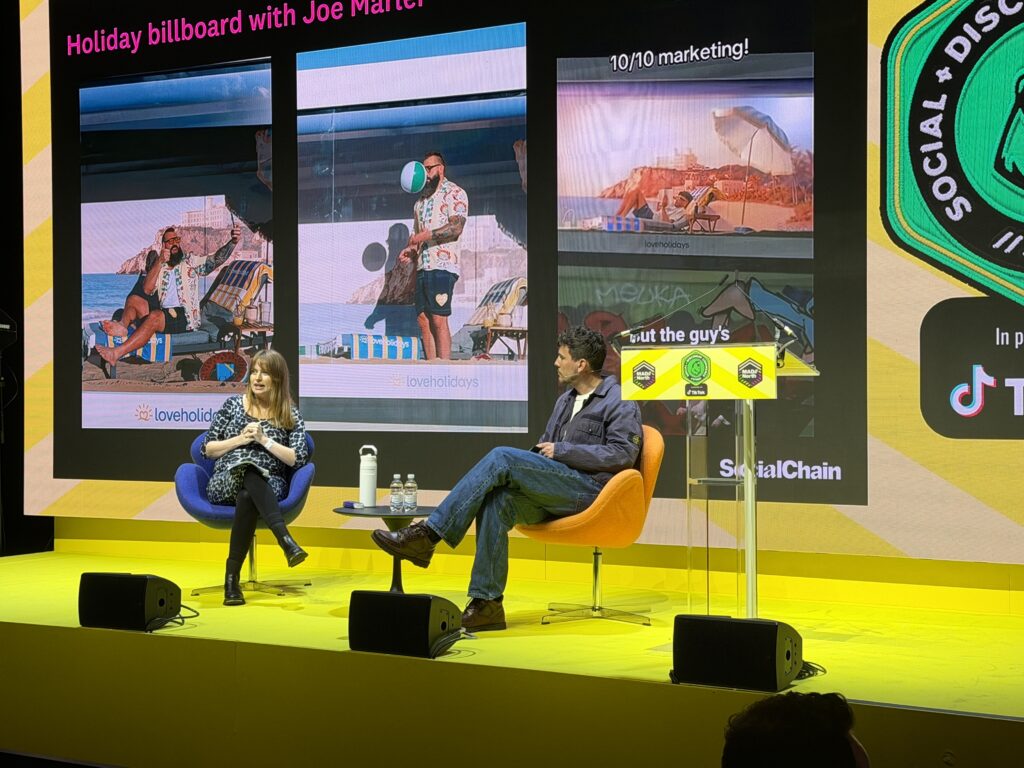
The broader takeaway for brands: treat creators as collaborators, not media placements. When they help build the idea, the work travels further.
3. A great integration needs a North Star.
Later in the day, we returned to the Social and Discovery Commerce Stage with Primark. The retailer’s senior global social media and community manager Kymberley Thomson joined our associate creative director Eve Young to unpack how Primark’s first fully integrated UK campaign In Denim We Can reshaped their approach to social.
Denim marked a move away from siloed channels and KPIs, towards shared impact. “Customers don’t shop the org chart – they shop the story,” says Kym. Rather than asking how social performed in isolation, the team asked bigger questions: Did the story land? Did people feel something? Did they search for it? Did they walk into store?
To make integration happen by design, Primark introduced a clear “North Star” manifesto that aligned ATL, social and PR around one emotional truth from the outset. This allows flexibility for different teams to execute the campaigns across different channels while still being aligned on the same end goal.
4. Translation beats amplification.
So, how do brands not fall into the trap of relying on a TV ad cutdown for social? For Primark, the team started with the emotional centre of the idea and evolved it through culture and real behaviours. That meant using creators and community members to make mass denim feel personal – from postpartum fit stories to social-native formats that reframed “problem areas” as power assets.
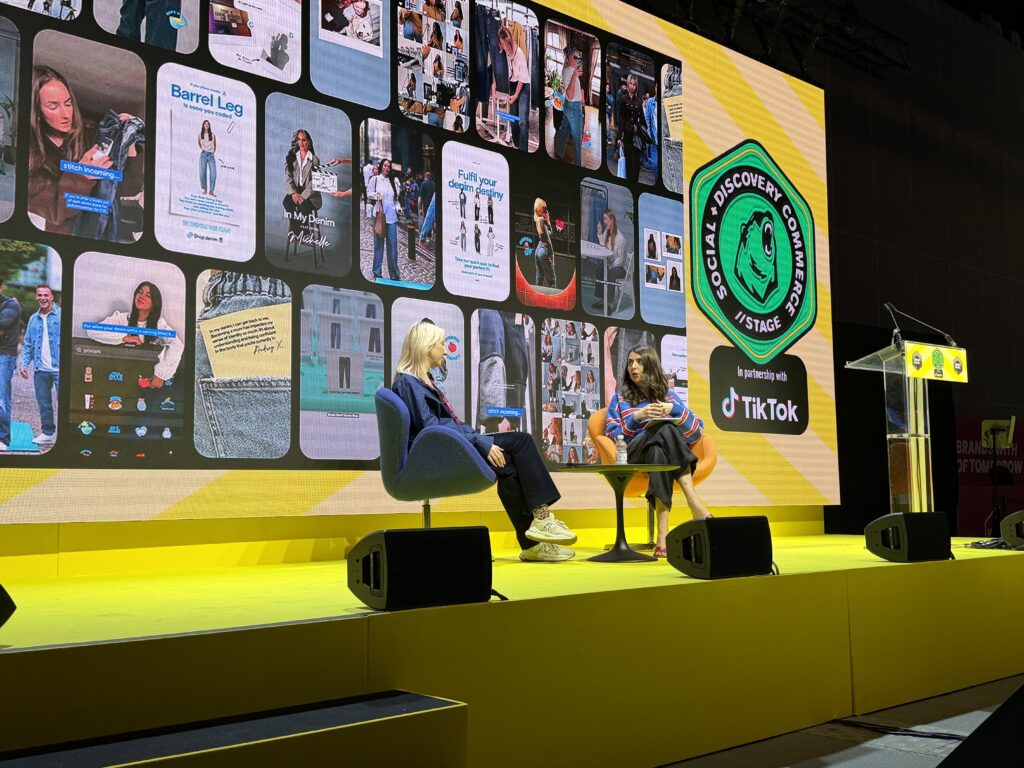
“If your idea only works in one format, it’s not an idea – it’s an asset,” explains Kym. Translation ensures a campaign feels native everywhere it shows up. Amplification alone rarely does.
5. Be brave. Trust the specialists.
Both sessions landed on a similar human truth: integration is as much about culture as it is about creative.
Primark emphasised early alignment, cross-agency collaboration, and clarity on roles, empowering teams to lead in their specialism rather than waiting for top-down sign-off at every step. Critically, great integration isn’t a copy and paste uniform approach, but it is unified.
“Be brave and trust the specialists,” advises Kym. “Not every asset needs to look polished; not every moment needs layers of approval. When everyone is aligned on the same North Star, flexibility becomes a strength, not a risk.”
“You can be memorable and commercially successful,” adds Jacqui. “People think its mutually exclusive because being memorable comes with risk, but it’s actually the secret to driving success. We want to push travel marketing out of its comfort zone. It’s stayed the same for too long.”
Like this? Read more